Free calorie & nutrition tracking
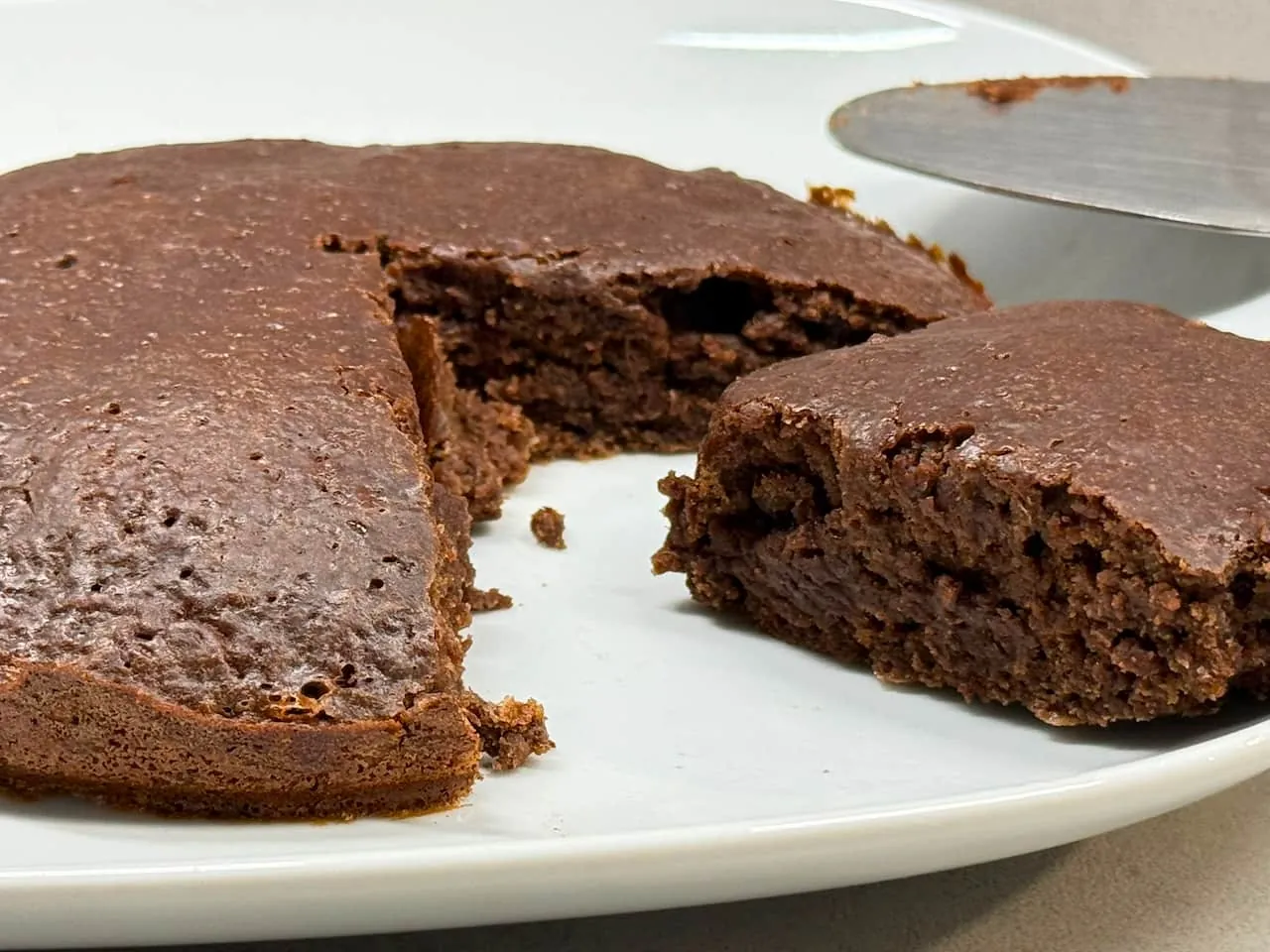
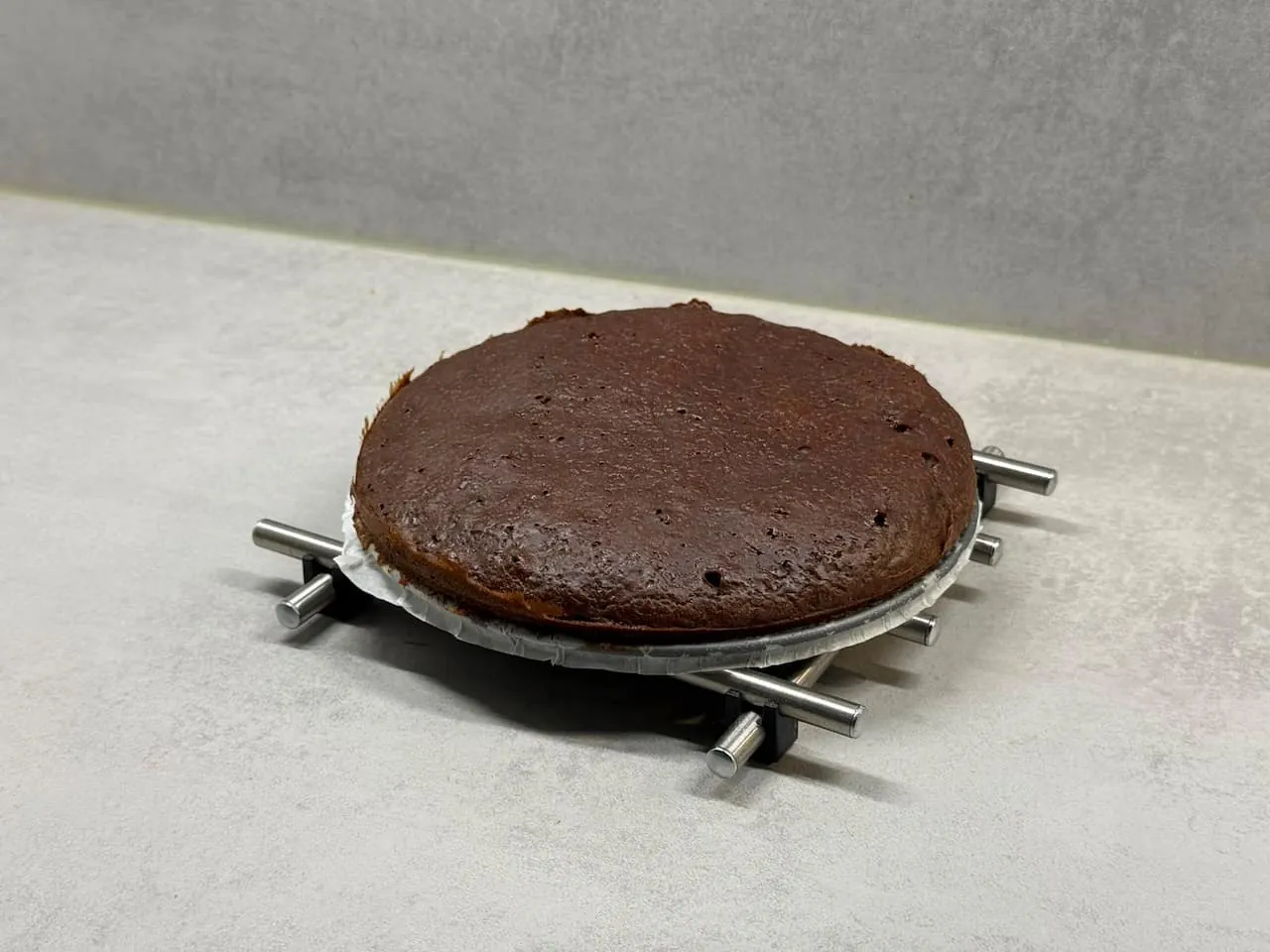
Here is a chocolate cake that fits even when you are tracking calories. One serving is about a hundred calories, but the texture still turns out fluffy and airy, not dry or rubbery as light baking sometimes goes. The secret is stiffly whipped egg white, which lifts the cake without large amounts of fat and sugar. In place of butter and cream there is quark and light milk, and most of the sweetness comes from erythritol. The cake is still worth calculating carefully, and on this page the nutritional values update automatically if you swap or remove ingredients.
Chocolate cake and calorie tracking do not usually go hand in hand. An ordinary chocolate cake easily has five hundred calories in a serving, and that comes from butter, cream and plenty of sugar. In this recipe the same familiar taste has been kept, but a serving is only about a hundred calories. That does not mean the cake is dry or bland. The idea is to replace the heaviest ingredients with lighter ones without the texture suffering, and that succeeds with a few simple tricks.
I do not want to make healthy versions that you eat only out of duty. A cake has to taste like cake. That is why there are no strange substitutes or ten special ingredients here, just ordinary ingredients combined cleverly. The result is a fluffy chocolate cake you can log with a clear conscience.
This is the most important stage of the whole recipe. When the egg white is separated from the yolk and whipped in a clean, dry bowl into a completely stiff foam, it traps a huge amount of air. It is this air that lifts the cake in the oven and keeps the texture airy, even though there is little fat and sugar. The foam has to be so firm that you can turn the bowl upside down without anything running out.
Just as important is how the foam is combined with the batter. It is not stirred forcefully, but folded gently with a spatula in two batches. This keeps the air bubbles intact. If you beat the foam into the batter too roughly, the air escapes and the cake turns flat. This is the point where patience is rewarded.
Most of the cake's sweetness comes from erythritol, a sugar alcohol with practically no calories. There is still a small amount of ordinary sugar too. That is not by accident. Sugar brings moisture and softness to baking and helps the surface brown, which erythritol alone does not do as well. When you use the two together, you get the sweetness down but keep the texture and mouthfeel that make the cake good. A cake made with pure sweetener easily turns dry and slightly cool on the tongue, and this combination fixes exactly that.
Most of the calories in an ordinary cake come from fat. Here butter and cream are replaced with soft quark and light milk, and there is only a small knob of a lighter spread for fat. Quark brings moisture to the cake and plenty of protein, so a serving is not just empty energy. Light milk thins the batter to the right consistency without extra fat. A splash of lemon juice brightens the flavour and brings a freshness that balances the darkness of the cocoa.
A few things decide the outcome. Use a clean and dry bowl for the egg white foam, because even a little fat or yolk stops the foam from firming up. Sift the dry ingredients so the batter turns even and airy without cocoa lumps. Do not overmix the finished batter, because too much working develops gluten and makes the cake chewy. Bake the cake straight away once the batter is ready, so the precious air does not have time to escape. Test for doneness with a wooden stick, and take the cake out as soon as no wet batter sticks to it, because an overbaked cake dries out quickly.
The cake is divided into eight servings, and it is worth slicing it into pieces right away. That keeps the serving size known, because a piece cut from an unsliced cake is almost always larger than intended. One serving is about a hundred calories, and it also brings around four grams of protein thanks to the quark.
The nutritional values have been calculated per ingredient, and they update in the calculator on this page if you swap or remove ingredients. If you use a different spread or quark, for example, you get the right numbers straight from your own products. The cake keeps in the fridge under a lid for two or three days, and the slices can also be frozen individually. Treating yourself and tracking calories do not rule each other out when you know what is on the plate.
Save this recipe to your own recipes, you can adjust the serving size and ingredients.