Free calorie & nutrition tracking
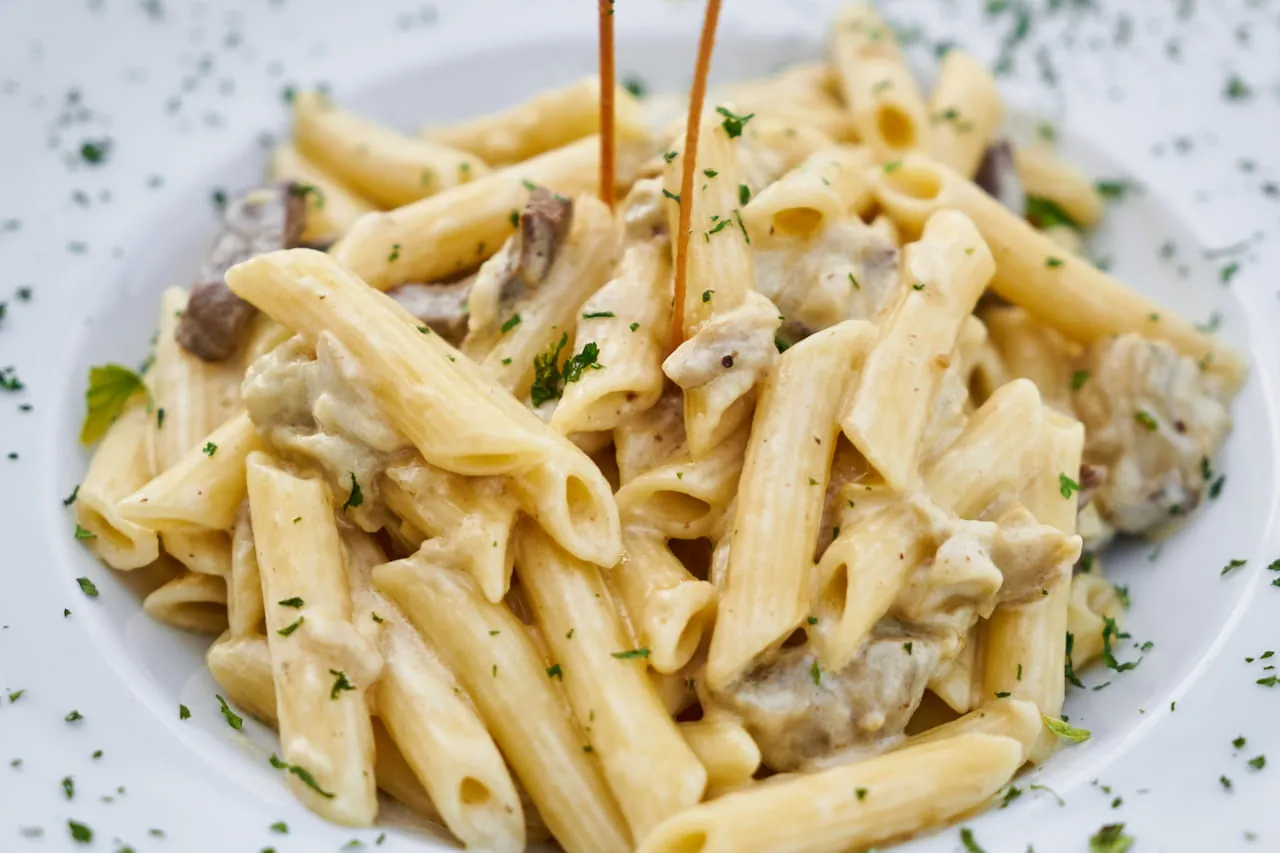
A rich, low-salt and quick chicken pasta with cooking cream. Perfect as a weeknight meal for the whole family, ready in under half an hour.
Chicken pasta is probably the dish that is cooked most often in Finnish homes. It is quick, most people like it and it can be put together even when tired. That is exactly why it is more interesting for weight management than any celebration dish. Foods eaten once a year do not decide the whole, but foods that repeat every week do.
The energy content of chicken pasta has an exceptionally wide range depending on how it is made. The same serving can be 300 or 700 kilocalories, and the difference comes from three things: the cream, the oil and the amount of pasta. This version is 307 kilocalories per serving and contains 28.5 grams of protein, so it is a complete meal and not a lightened version that has to be followed by something else.
This is the single most important choice in the recipe, and it is made in the shop rather than in the kitchen. Cooking cream with 10 percent fat contains about 95 kilocalories per hundred grams. Double cream contains about 340. When the recipe has 200 grams of cream, the difference is about 490 kilocalories in the whole pan, which is about 120 kilocalories per serving. That is the equivalent of a proper snack, and it disappears into the sauce unnoticed.
Lighter cream is often feared to leave the sauce watery. The concern is justified, but the solution is not fat, it is time. When the sauce is allowed to simmer gently for two or three minutes, the liquid evaporates and the sauce thickens by itself. If the sauce still stays thin, a splash of the pasta cooking water can be added. The starch in it binds the sauce more effectively than cream, and it adds practically no energy at all.
This is the point where calorie tracking goes wrong most often. Pasta absorbs water while cooking and its weight roughly doubles. A hundred grams of dry pasta is about 350 kilocalories, but a hundred grams of cooked pasta only about 130 kilocalories. It is the same ingredient, but the number is nearly three times higher depending on the stage at which it is weighed.
In this recipe the pasta is recorded as cooked, so 300 grams of cooked pasta corresponds to about 120 grams of dry. If the pasta is weighed dry, dry pasta has to be selected in the calculator. If it is weighed from the plate, cooked is selected. Confusion in this direction is very common, and it is exactly the size of error that explains why the weight does not move even though tracking appears to be in order.
The recipe contains about half a teaspoon of salt for the whole four serving pan, which makes about 0.9 grams per serving. The amount is deliberately moderate. Ready made cream sauces and jars of pasta sauce typically contain clearly more salt, and one gets so used to it that home cooked food starts to taste of nothing.
If the food tastes bland, it is worth trying garlic, black pepper and fresh basil before adding salt. The issue is often not a lack of salt but a lack of aroma. Salt can of course be added to taste, but it should be done at the end and tasted in between. The sauce also becomes saltier as it simmers and the liquid evaporates, so an amount that felt right at the start can be too much at the end.
The recipe makes four servings and suits preparing the weekday meals of the week in advance. Chicken pasta keeps in an airtight box in the fridge for about 3 days. The pasta absorbs sauce as it stands, so the serving is slightly drier the next day. This is easily fixed by adding a splash of water or milk to the box before reheating.
When food is prepared in advance for several days, the pasta should be boiled clearly al dente, meaning a little bite is left in it. The pasta still cooks in the sauce and when reheated, so this way the serving is not mushy on the third day. The detail is small, but it decides whether a prepared portion is eaten with pleasure or out of duty.
Fresh basil is best left out of the boxes that are packed in advance, as it darkens and loses its aroma within a day. It can be scattered over the serving only after reheating, which keeps the flavour as fresh as on the first day. The same goes for any grated parmesan, which is best added on the plate.
Save this recipe to your own recipes, you can adjust the serving size and ingredients.