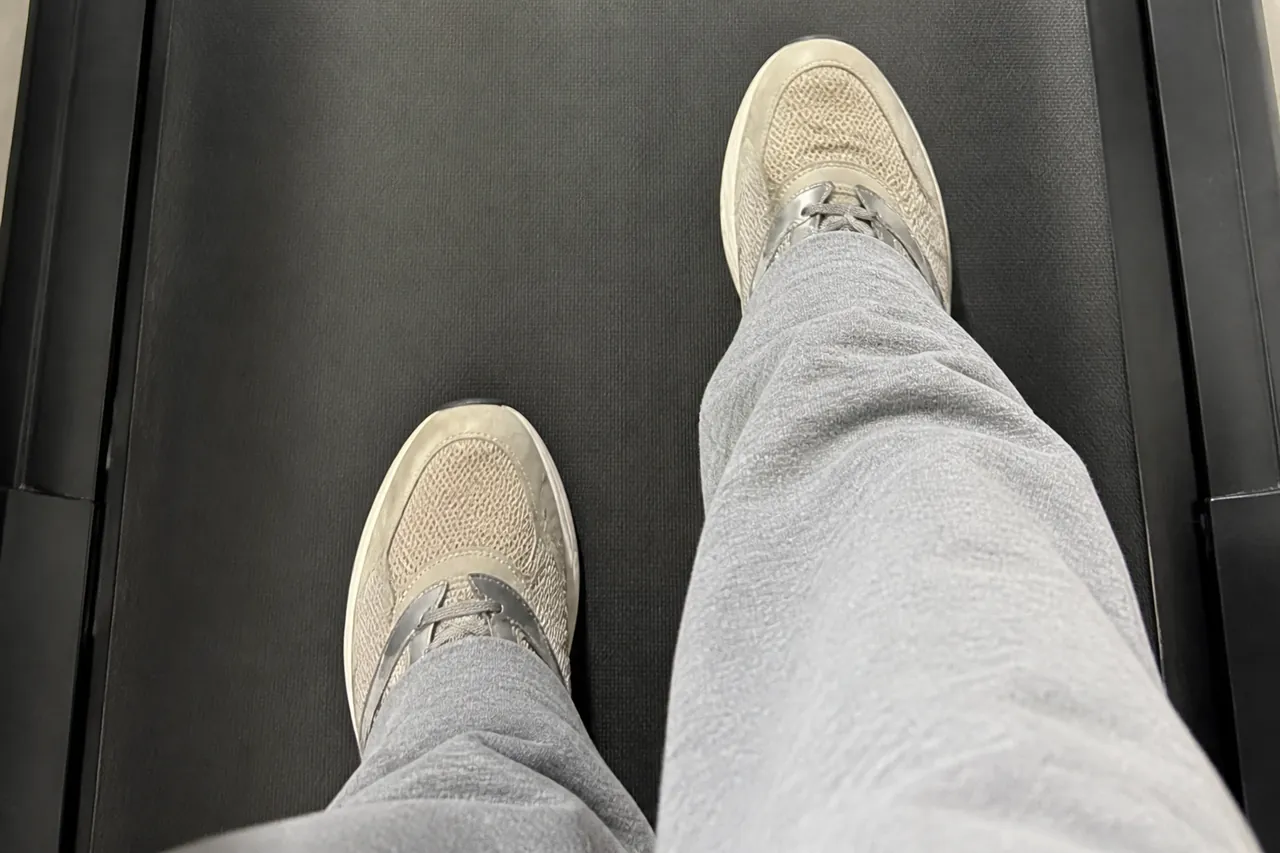
At first, a walking pad sounded like a slightly unnecessary device to me. If I wanted to walk, I could simply put my shoes on and go outside. In principle, that is still true. Everyday life does not always work that neatly, though. Sometimes it rains, sometimes it is dark, and sometimes I do not feel like going out again after a long working day. At the same time, I can easily spend far too many hours sitting.
I bought a walking pad for the space between those two things. It was not meant to replace outdoor walks, the gym or any other exercise. I wanted to remove the small barrier that often appears between normal movement and doing nothing. It has been much more useful than I expected. The biggest change has not been one hard workout. Movement now builds throughout the day almost by accident.
My step count doubled without a separate walk
Before the walking pad, an ordinary working day could end at around five or six thousand steps. Going out for a separate walk raised that number, but it required a decision, time and leaving the house. With the walking pad, I often reach more than ten thousand steps without completing anything I would describe as a walking workout.
That has been the main benefit for me. When I walk gently while reading email, watching a video or doing light work, I do not think of myself as exercising. Half an hour passes quickly and can add a couple of thousand steps. When I repeat that later, the total for the day can quietly double. The steps do not feel like another task because they happen alongside something I was already going to do.
Active energy rises steadily
I can also see the difference in active energy on my watch. A walking pad does not burn an enormous amount of energy in a few minutes, and that is not the point. Gentle walking can continue for a long time without breathlessness or a need for recovery. One session may look small on the watch, but several sessions start to add up across the day.
For me, active energy on a walking pad day can be several hundred kilocalories higher than on a day spent almost entirely in a chair. I do not treat that as permission to eat all of it back. I use the number as evidence that the day really was more active. When I follow my weight trend and food intake in RestinCal at the same time, the whole picture becomes easier to understand.
Movement after a meal makes sense
One of the best times to use the pad has been after eating. I used to finish a meal and return directly to my chair. Now I may step onto the pad for ten or fifteen minutes at a very calm pace. It does not feel like a workout, but I often feel lighter after the meal and the familiar afternoon tiredness is less noticeable.
Research also supports light walking after meals as a way to moderate the post meal glucose response. Working muscles use glucose, and even a short walk can reduce the rise compared with continuing to sit without a break. This does not mean that a walking pad treats diabetes or replaces medication. In my own routine, it is simply an easy way to interrupt sitting at a moment when a little movement may be useful.
A slow pace works better than performing
I made the mistake of setting the speed too high at first. I thought faster walking must automatically be better. Working became awkward, my steps could be heard throughout the room and getting onto the pad started to feel like a performance of its own. As soon as I lowered the speed, using it became far more natural.
The barrier to movement almost disappears
The greatest strength of a walking pad is its convenience. I do not need to change clothes, plan a route or reserve a full hour. I can walk for five minutes, twenty minutes or stop immediately when work needs more attention. That flexibility is what makes me return to it.
Small movement becomes a large part of the day
A walking pad has made my everyday life more active. My daily steps have often doubled, active energy has risen and long periods of sitting are interrupted more frequently. Calm walking after meals has also become a habit that feels good and does not require any special motivation.
The most important lesson for me is that movement does not always need to look like exercise. When it blends into a normal day, much more of it accumulates and it happens more consistently. I am not trying to beat the numbers on my watch or make every day perfect. I only want to sit a little less and move a little more. For that job, the walking pad has been a surprisingly effective tool.
Source and further reading
Diabetes Care published a study in which gentle walking after meals reduced the post meal glucose response. Read the original study.
Sources and further reading
Reviewed 6 August 2026