Free calorie & nutrition tracking
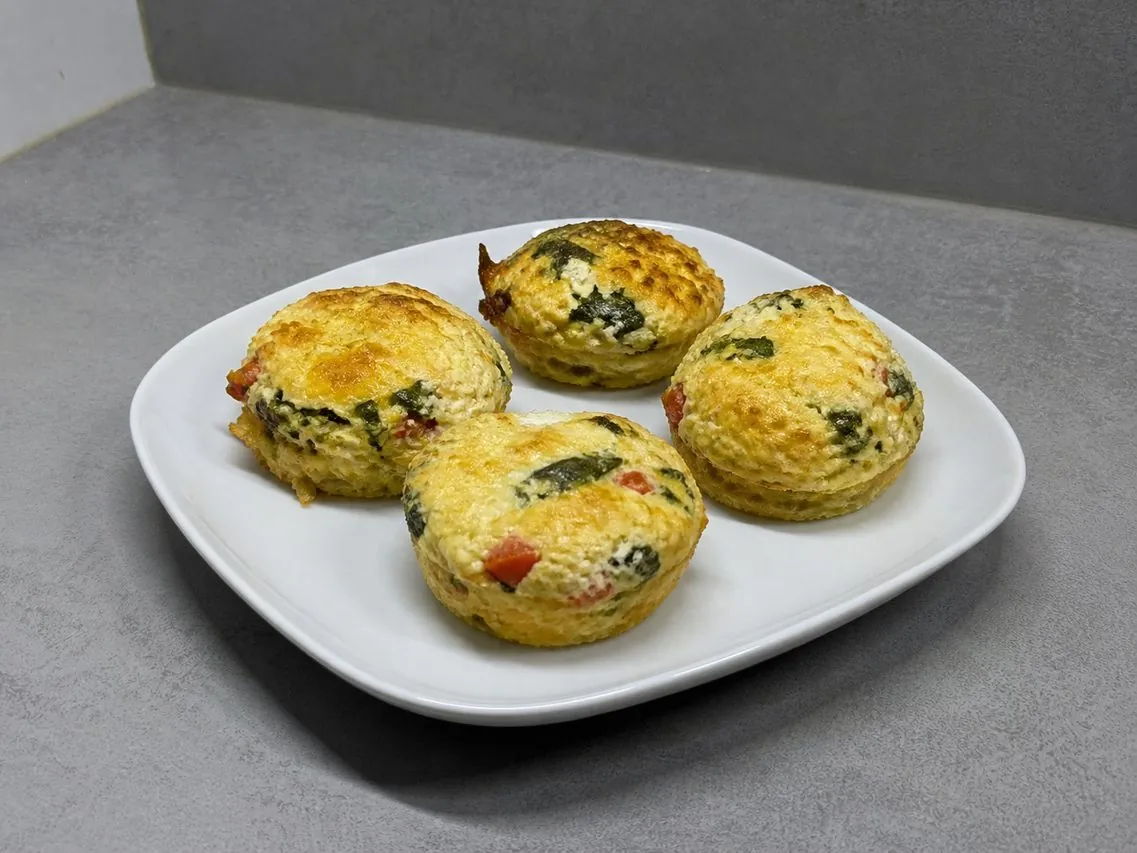
Easy oven baked egg muffins with cottage cheese and vegetables, suitable for preparing ahead. The nutrition values can be adjusted to match the products you actually use.
Egg muffins are basically a portioned omelette. The muffin shape does not make the ingredients healthier, but it makes the result easier to store, pack and log. I can see the batch, count the three or four muffins it makes and pack them as one serving. That kind of practical portioning was useful during my own weight loss because it reduced repeated estimating.
Cottage cheese adds protein and keeps the centres soft. It also creates a less uniform texture than grated cheese. I like that, but anyone expecting a perfectly smooth omelette should know what the recipe is meant to be. Small cottage cheese curds remain visible after baking. They are part of the result, not a mistake.
Vegetables release water in the oven. A small amount keeps the muffins tender, but too much can leave the centres wet. Dice bell pepper fairly small and avoid adding large quantities of watery tomato. Ham strips can also carry moisture, so I pat them dry if they look wet.
The egg mixture only needs light whisking. Vigorous beating traps more air, which makes the muffins rise dramatically and then collapse. Some sinking is normal as they cool. Fill each cup evenly and leave a little space at the top. The mixture expands during baking even though it contains no flour or raising agent.
Egg sticks easily to an unprepared metal tin. I grease every cup, including the upper edge, or use flexible silicone cups. Paper cases often cling to egg and waste part of the muffin. After baking, I let the muffins stand for about five minutes, then run a thin spatula around the edge. They release more cleanly once the structure has settled.
Do not overbake them in an attempt to make the edges dark. The centres should be set, but continued heat dries the egg and makes it rubbery. Ovens vary, so check before the full time has passed. A knife inserted into the centre should not come out with liquid egg.
The recipe makes one serving of three to four muffins, and the calculator shows the values for that whole batch. Egg size and cottage cheese brands vary, so the numbers are estimates. Cottage cheese, ham and grated cheese are the main sources of salt. If sodium matters to you, compare packages rather than relying on one generic value.
The full batch is a protein-rich breakfast or snack, but it may not be a complete meal for everyone. I often pair egg muffins with bread, fruit, vegetables or another suitable side. The right amount depends on the person and the day. The purpose of the recipe is to provide a flexible prepared component, not to dictate a universal breakfast.
Cool the muffins promptly and place them in a covered container in the refrigerator. They are convenient for the next few days, but use normal food safety judgement and discard them if their smell or appearance changes. They can be eaten cold or reheated gently. High microwave power for too long makes egg tough, so short intervals work better.
Freezing is possible, although thawed vegetables may make the texture slightly wetter. Freeze the muffins separately first or place paper between them so you can remove only what you need. Thaw in the refrigerator and reheat until hot.
Mushrooms, spring onion, spinach and broccoli can all work, but cook watery fillings first. Strongly flavoured herbs, smoked paprika or chilli add variety without changing the structure. More cheese can be added, but it changes both energy and salt. I enter additions in the calculator instead of treating them as free ingredients.
I value this recipe because it is ordinary and repeatable. It does not promise effortless weight loss. It simply turns eggs, cottage cheese, ham and vegetables into prepared portions that can support a planned day. My own loss of more than 40 kilograms came from consistent choices over time, and recipes like this made those choices easier.
This content is based on my personal cooking and tracking experience and is intended as general recipe information. It is not medical or personalised nutrition advice. People with allergies, pregnancy related concerns or medically prescribed diets should verify ingredients and storage guidance with a qualified professional.
The nutrition values use the same ingredient amounts and product values as the Finnish recipe. Brands and the finished weight can change the estimate. Sources reviewed 6 August 2026: Fineli, Finnish Food Authority and EFSA.
Note: This recipe shares my personal cooking and tracking experience. It is general information, not individual medical or nutritional advice.
Johannes P. is a self taught, 24 year old fitness enthusiast who lost more than 40 kilograms. That experience inspired him to build RestinCal as a simple and free nutrition tracking service.
Save this recipe to your own recipes and adjust the serving size or ingredients.