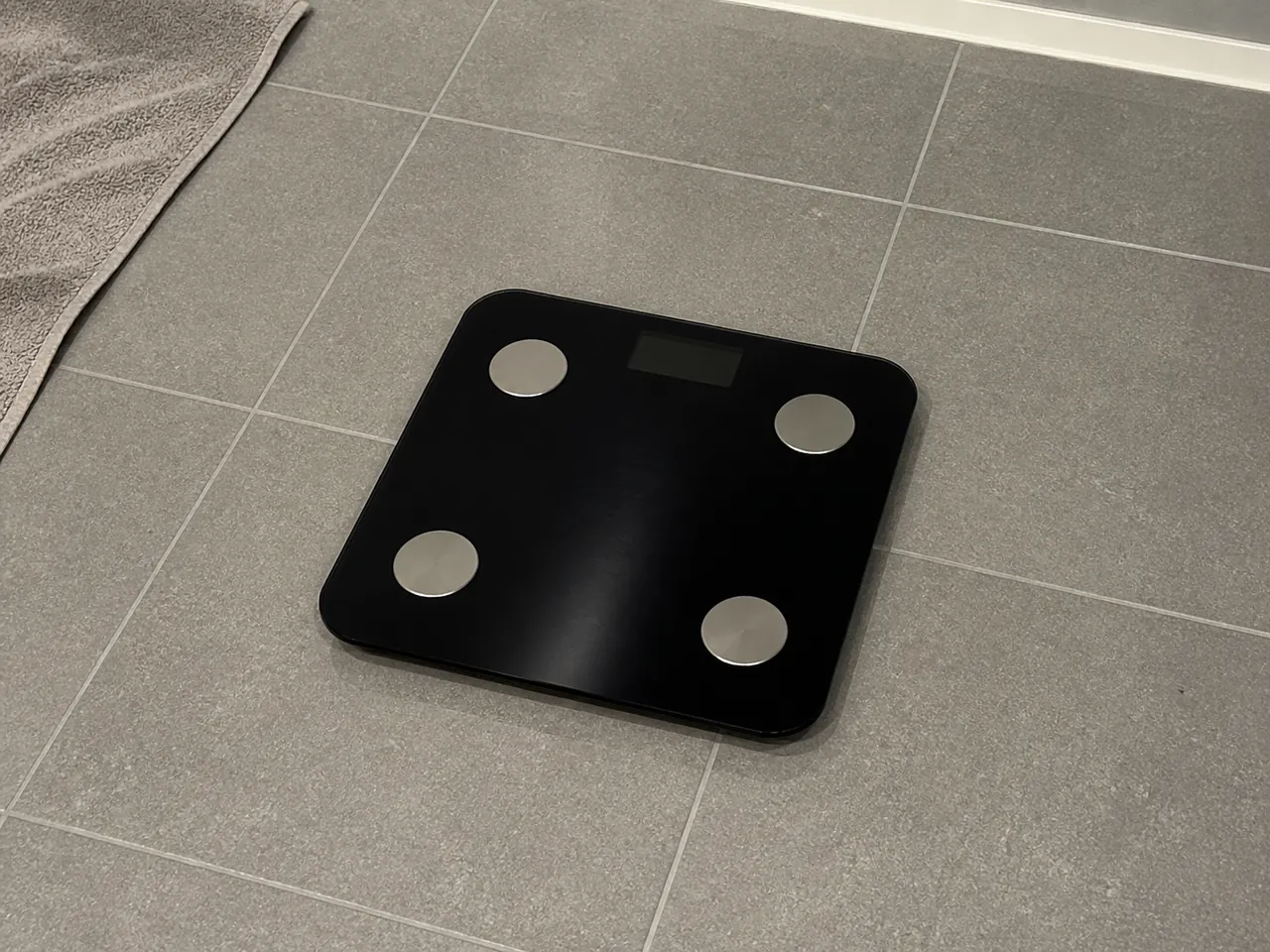
You wake up, step on the scale and see a number one kilogram higher than yesterday, even though you followed your plan. This is one of the most frustrating parts of weight management. A quick change on the scale often reflects water and the contents of the digestive system far more than a meaningful change in body fat.
I saw the number move back and forth throughout my own loss of nearly 40 kilograms. At first, every increase felt like a setback. Following the same process for long enough taught me to pay less attention to one morning and more attention to the direction across several weeks.
The scale can rise after a day that went exactly to plan
The body is not a fixed object. Its mass changes with food, drink, bathroom visits, activity and the time of measurement. A one-kilogram rise overnight does not show that one kilogram of fat appeared. Short-term scale movement usually includes water and material still passing through the digestive system.
The amount of normal variation is not identical for everyone. In one long series of standardised measurements from a healthy adult, day-to-day variability was about 0.5 percent of body weight. That study followed one person, so it cannot establish a universal range. It does show why attaching one fixed number, such as one to three kilograms, to every person would be misleading.
Water balance explains many quick changes
Water is often the main reason yesterday and today look different. A change in carbohydrate intake can affect stored glycogen. Human research supports the practical estimate that at least around three grams of water are stored with each gram of muscle glycogen. A meal with more carbohydrate than usual can therefore refill some glycogen and bring water with it.
A saltier meal may also affect the next morning's fluid balance. The result depends on the whole meal, drinking, previous intake and the individual. I cannot look at one weigh-in and know that salt was definitely the reason. I can only recognise it as one plausible part of the picture.
Food and drink have weight before the body processes them
A large evening meal still has physical mass the following morning. Food, drink and intestinal contents count on the scale until they have been processed and excreted. This simple point is easy to forget because a scale gives one number without explaining what that number contains.
Meal timing, portion size, bowel movements and changes in fibre intake can all alter the amount held in the digestive tract. Fibre is useful in an ordinary diet, but changing it suddenly may change both water and intestinal contents. None of this tells you that the plan has failed.
Training can temporarily move the number up
A new or demanding resistance workout may lead to soreness, swelling and temporary fluid shifts during recovery. Research on exercise-induced muscle damage describes swelling as one of the possible signs after unfamiliar eccentric exercise. The response varies, and a higher weigh-in cannot be blamed on one workout with certainty, but training is a reasonable short-term factor to keep in mind.
The mistakes that made weighing harder for me
The first mistake was reacting too strongly. Cutting calories sharply or adding extra exercise because of one high reading turns ordinary variation into unnecessary stress. The second mistake was comparing measurements taken under different conditions. An evening weight after meals is not directly comparable with a morning weight after using the bathroom.
How I follow weight without letting it run the day
- I weigh under similar conditions, usually in the morning after using the bathroom and before breakfast.
- I compare weekly averages instead of yesterday with today.
- I give a new routine enough time before changing the calorie target.
- I also notice waist measurement, how clothes fit and how the plan is working in normal life.
A daily measurement can still be useful because several measurements make the average more informative. If daily weighing causes anxiety or compulsive behaviour, less frequent measurement may be a better choice. The method should help, not take over.
Common questions about weight fluctuation
Why can weight rise overnight?
A later or larger meal, more carbohydrate or salt, different drinking, intestinal contents and a demanding workout can all contribute. One measurement cannot identify the exact cause.
How much fluctuation is normal?
There is no single kilogram range that suits everyone. Body size, intake, measurement timing and health all matter. A sudden persistent change or swelling, shortness of breath or other symptoms should be discussed with a healthcare professional.
Should weight fall every day during fat loss?
No. A calorie deficit can support fat loss while water and digestive contents hide it for several days. The multi-week trend is more useful than a straight line from one morning to the next.
Sources and further reading
Reviewed 6 August 2026