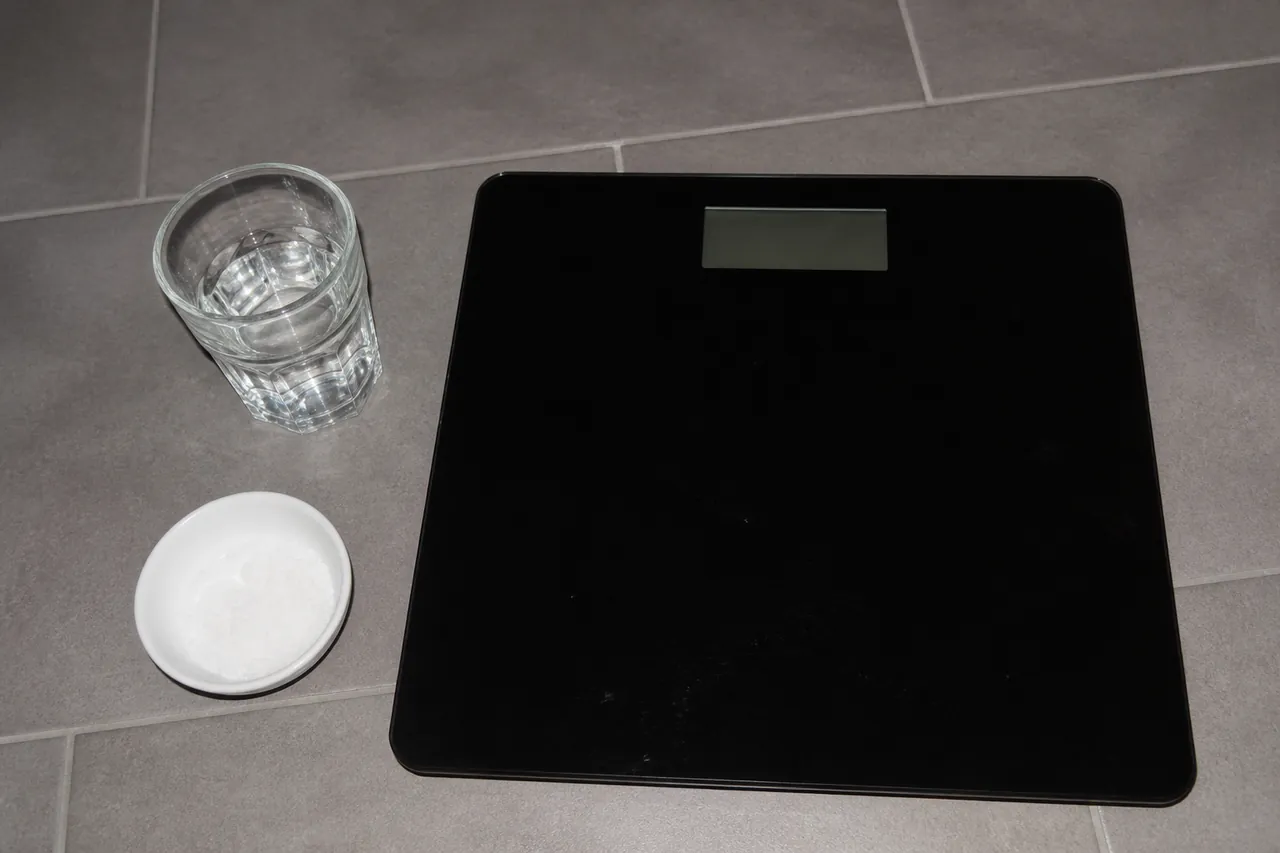
A scale measures total mass, not body fat alone. During my loss of nearly 40 kilograms, I saw the number rise after days that still matched my plan. Learning to separate a quick fluctuation from a longer trend stopped me from making unnecessary corrections.
Water can move quickly
Carbohydrate intake affects stored glycogen, and glycogen is stored with water. Salt, fluid intake, exercise recovery and hormonal factors may also influence fluid balance. A higher reading after a different meal is therefore not proof that the change is fat.
Food and drink also have physical mass while they move through the digestive system. A late or larger dinner can still be represented on the morning scale. The scale cannot label which part is water, intestinal contents, fat or other tissue.
Fat change is a trend, not an overnight diagnosis
Energy surplus can increase fat over time, but I cannot calculate the exact fat change from two weigh-ins. Popular calorie-per-kilogram rules are rough models, and body-weight dynamics are not perfectly linear. I use several measurements under similar conditions and compare weekly averages.
My practical checklist
- Was the measurement taken at the same time and under similar conditions?
- Was the previous meal later, larger, saltier or higher in carbohydrate?
- Did training, travel or bowel habits change?
- Is this one reading or a trend lasting several weeks?
- Are there symptoms that need medical attention?
I do not use this list to diagnose the reason. It only prevents me from assuming that fat is the only explanation. If the average keeps rising over weeks, I review intake and activity calmly.
Common questions
How fast can water weight disappear?
There is no fixed timetable. The cause and the individual both matter.
Can I remove water by drinking less?
Deliberate dehydration is not a safe weight-management method.
When should swelling be checked?
Sudden, persistent or unexplained swelling, especially with breathing difficulty or other symptoms, needs healthcare assessment.
Salt, carbohydrate and training are clues, not diagnoses
A saltier meal may be followed by a higher reading, but the scale cannot prove salt was the sole cause. More carbohydrate can refill glycogen and associated water. A demanding workout may bring temporary swelling during recovery. Several factors often change together.
Menstrual-cycle changes can affect fluid balance for some people, but timing and size vary. Medication and health conditions can matter as well. A universal promise that water weight will disappear in a fixed number of days is not responsible.
How I use averages
If daily weighing feels neutral, several morning measurements can form a weekly average. I compare averages under roughly similar conditions. If weighing causes anxiety or compulsive behaviour, fewer measurements may be better.
Waist measurement, clothing fit and plan consistency add context, but none is a medical diagnostic tool.
Why a quick drop is not pure fat loss either
The same caution applies when the scale falls rapidly. Less carbohydrate, a smaller meal, sweating or different bowel contents can lower mass quickly. A satisfying low reading is still only one reading.
This protects me from two opposite errors: panicking after a rise and assuming every sudden fall proves the plan is perfect. The trend is slower and less exciting, but more useful.
Consistency improves comparison
I weigh at a similar time, usually in the morning after using the bathroom and before eating. An evening reading after food and drink is not directly comparable. Perfect conditions are impossible, but roughly consistent conditions reduce noise.
I also avoid changing calories because of one reading. I give the plan enough time unless a health concern requires faster action.
Common situations that create confusion
Travel can change meal timing, salt intake, movement, sleep and bowel habits at once. A holiday reading therefore contains several possible explanations. Starting a new training routine creates similar uncertainty because soreness, glycogen and food intake may all change together.
I write down context only when it helps. I do not need to explain every fluctuation. Most readings can simply join the average.
What I do when the trend really rises
If several weekly averages move upward, I review portions, snacks and activity. I make one moderate adjustment and watch again. Calling every increase water would be just as misleading as calling every increase fat.
What I avoid after a surprising reading
I do not cut food sharply, add a punishment workout or try to dehydrate myself. Those reactions are based on an explanation the scale has not actually provided. I keep the next few days normal and let more measurements add context.
If the longer average rises, I can review portions and activity without pretending every change is water. If swelling is sudden, persistent or accompanied by other symptoms, tracking is not the right tool for diagnosis and healthcare advice is appropriate.
Sources and further reading
Reviewed 6 August 2026