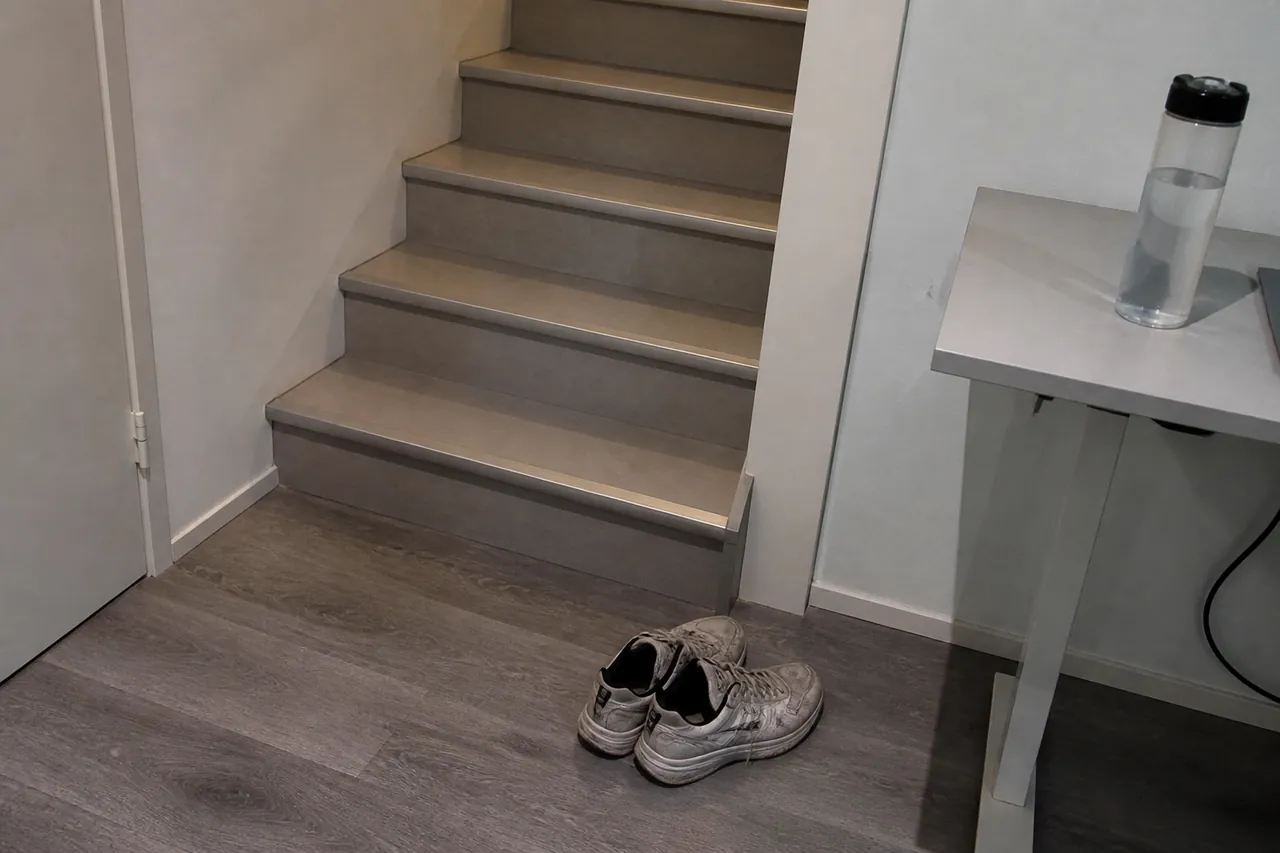
This article is not another list telling you to burn a precise number of calories by taking the stairs. Devices and tables only estimate energy use. The useful idea is that several small choices can reduce sitting and make movement a visible part of the day.
During my loss of nearly 40 kilograms, the easiest actions were the ones prepared in advance. Shoes by the door helped more than an elaborate programme hidden in my head.
Build movement into places that already exist
I can stand during a phone call, walk one errand, take stairs when suitable, carry groceries or make a short circuit before sitting down for the evening. None is a secret fat-loss trick. They simply add movement without requiring a separate workout slot.
Why I do not publish calorie promises
The energy cost of an action depends on body size, duration, speed, efficiency and environment. A headline claiming that one household task always burns a fixed amount is misleading. I track the habit and the longer weight trend rather than eating back a device estimate.
A practical environment checklist
- Keep walking shoes easy to reach.
- Set a natural reason to stand between work blocks.
- Place frequently used items where getting them involves movement, without creating a safety risk.
- Choose one regular errand that can sometimes be done on foot.
- Use a walking pad only when attention and surroundings make it safe.
This differs from my broader article about increasing daily activity by focusing on the physical environment and triggers. The aim is to make the next movement obvious. It is not to fill every quiet moment with calorie burning.
Rest still belongs in the day
More is not automatically better. Pain, illness and exhaustion are not cues to force extra steps. Sitting and recovery are normal. A useful routine adds movement while leaving enough recovery to continue.
Common questions
Do small actions matter?
Each effect is small, but repeated actions add movement and reduce sedentary time.
Should I count every calorie burned?
No. Treat estimates cautiously and evaluate the overall trend.
Is standing enough?
Standing changes posture and may break sitting, but it does not replace varied physical activity.
Choose triggers instead of relying on memory
A vague promise to move more is easy to forget. I connect movement to something already happening: stand after a meeting, walk after lunch or take stairs when arriving home. The trigger should fit the environment safely.
I change one or two things first. Ten reminders at once turn an ordinary routine into another programme. When one action becomes familiar, another can be added.
How I evaluate the change
I ask whether the action repeated, whether it caused pain and whether the day contains less uninterrupted sitting. I do not judge it by a dramatic first-week calorie number. The broader activity and weight trend provide more context.
Small actions support rather than replace planned exercise. Strength, aerobic fitness and mobility may require more specific activity. The environment simply gives me more chances to move between sessions.
Examples across a normal day
In the morning, I can put breakfast dishes away before sitting down to work. During work, I can stand for one suitable call or walk while thinking through a problem. After lunch, a short route provides a clear transition back to the day.
In the evening, errands, cooking and household tasks add movement without being labelled exercise. I do not count them as exact calorie credits. Their value is reducing long uninterrupted sitting.
Accessibility changes the action, not the principle
Stairs and walking are not suitable for everyone. Seated movement, mobility exercises or another adapted activity may be the right version. The article's examples are options, not requirements.
The safest action respects balance, pain, fatigue and the environment. A health professional can help when limitations make general advice unsuitable.
A weekly review
At the end of the week, I ask which small action happened naturally and which one was constantly skipped. I keep the useful action and remove or redesign the awkward one. A habit list does not become better simply by becoming longer.
I also notice whether the changes compete with sleep, meals or recovery. Movement should support the rest of the routine. If I pace the room late at night only to reach an arbitrary number, the target may be controlling me rather than helping me.
Keep the list short
I normally change one or two things at a time. Shoes beside the door or one regular walking errand is easier to remember than a full list of hourly targets. Once an action feels ordinary, I can decide whether another one is useful. The goal is a day with a little more movement, not a schedule that makes rest feel like failure.
Sources and further reading
Reviewed 6 August 2026