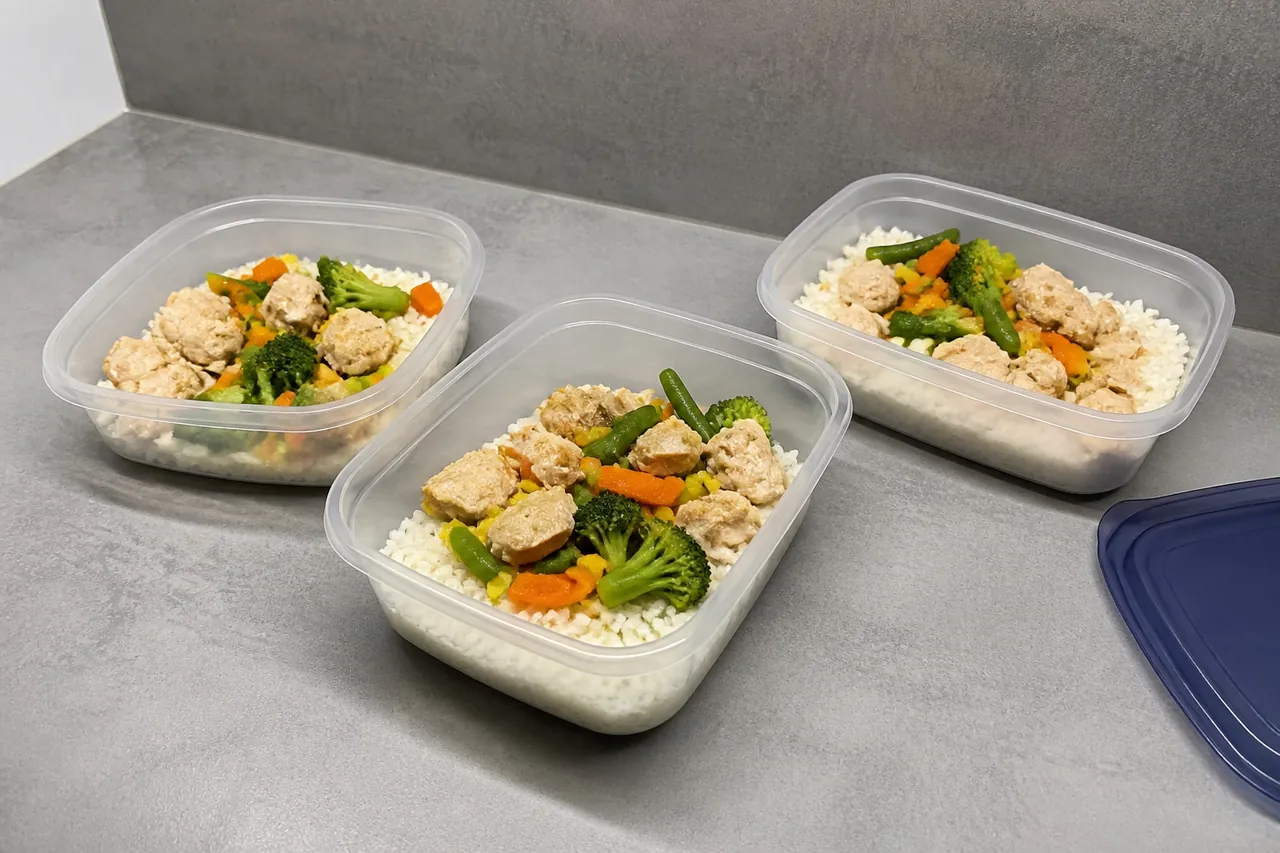
Preparing meals in advance is one of the simplest ways I have found to reduce weekday friction. During my loss of nearly 40 kilograms, planning helped most on ordinary workdays. When I cooked dinner, I often made the next day's portion at the same time. It was a small habit, but it removed one decision from the moment when I was already tired and hungry.
Meal preparation does not have to mean a fridge full of identical boxes
I do not prepare every meal for an entire week. Two or three days is usually enough to make a difference. Sometimes preparation means a complete meal in a container. Sometimes it means cooked potatoes, roasted vegetables and a sauce that can be combined in different ways.
The point is not to create a perfect Sunday routine for social media. The point is to make tomorrow easier. Doubling tonight's dinner may be all the meal preparation a busy week needs.
It makes calorie tracking more straightforward
When I cook several portions from one recipe, I weigh and record the ingredients once. RestinCal calculates the whole recipe and I divide it into portions. The boxes do not guarantee a calorie deficit, but they make portion size and the day's overall intake easier to understand.
Equal-looking boxes are not always equal by weight, especially with mixed dishes. If accuracy matters, I weigh the finished batch and divide the total by the number of portions. I do not need every carrot piece to be identical. I only need a repeatable estimate that is useful in ordinary life.
Choose foods that still taste good tomorrow
Soups, stews, oven dishes, sauces and roasted vegetables usually work well. I keep crisp or fresh ingredients separate when possible. A salad, herbs or yoghurt-based sauce added after reheating can make the same base feel less repetitive.
Variety matters because the most carefully calculated meal is useless if I no longer want to eat it. I would rather prepare three days of food I enjoy than force myself through five days of dry chicken and rice.
Food safety belongs in the plan
Cooked food should be refrigerated promptly, generally within two hours. Shallow containers help a large batch cool faster than one deep pot. I keep the refrigerator at 4 °C or below and avoid leaving boxes on the counter while I do something else.
FoodSafety.gov gives three to four days as a general refrigerator limit for many cooked leftovers. The exact dish, handling and cold chain still matter. If I will not eat a portion within a few days, I freeze it early rather than wait until the last moment. Food that smells, looks or feels questionable is not worth gambling on.
A small routine is easier to maintain
- Cook twice the amount at dinner and pack tomorrow's lunch immediately.
- Choose one or two main dishes, not a complicated menu for every day.
- Use stackable containers and label frozen portions with the dish and date.
- Keep sauces and fresh toppings separate when that improves texture.
- Record the recipe while cooking, when the packages and weights are still in front of you.
I also keep one easy backup in the freezer. It prevents a changed schedule from turning into a crisis and makes flexibility part of the system rather than a failure.
Common mistakes I try to avoid
The first is making too much of one meal before knowing whether it reheats well. The second is forgetting that a cooked batch still needs rapid cooling and cold storage. The third is planning only around calories while ignoring taste, texture and how the week actually works.
A prepared meal is a tool, not an obligation. If plans change, I move a portion to the freezer or eat it the next day. Long-term routines survive because they bend.
A shopping list is part of the same routine. I choose one or two main dishes, check what is already in the cupboard and favour ingredients that can work in another meal. Roasted vegetables can go into an omelette, while the same sauce can be served with a different side. Variety does not require starting from zero every day.
Common questions
How long does cooked food keep in the fridge?
A common official guideline for many leftovers is three to four days at no more than 4 °C, provided the food was handled and chilled properly. Some foods need different treatment.
Can every meal be frozen?
Many soups, stews, cooked meats and oven dishes freeze well. Fresh salad, some dairy sauces and potatoes may change texture. Test one portion before freezing a whole batch.
How do I avoid getting bored?
Prepare flexible components, vary seasoning and add fresh toppings after reheating. Two different sauces can make the same base feel like two meals.
Sources and further reading
Reviewed 6 August 2026