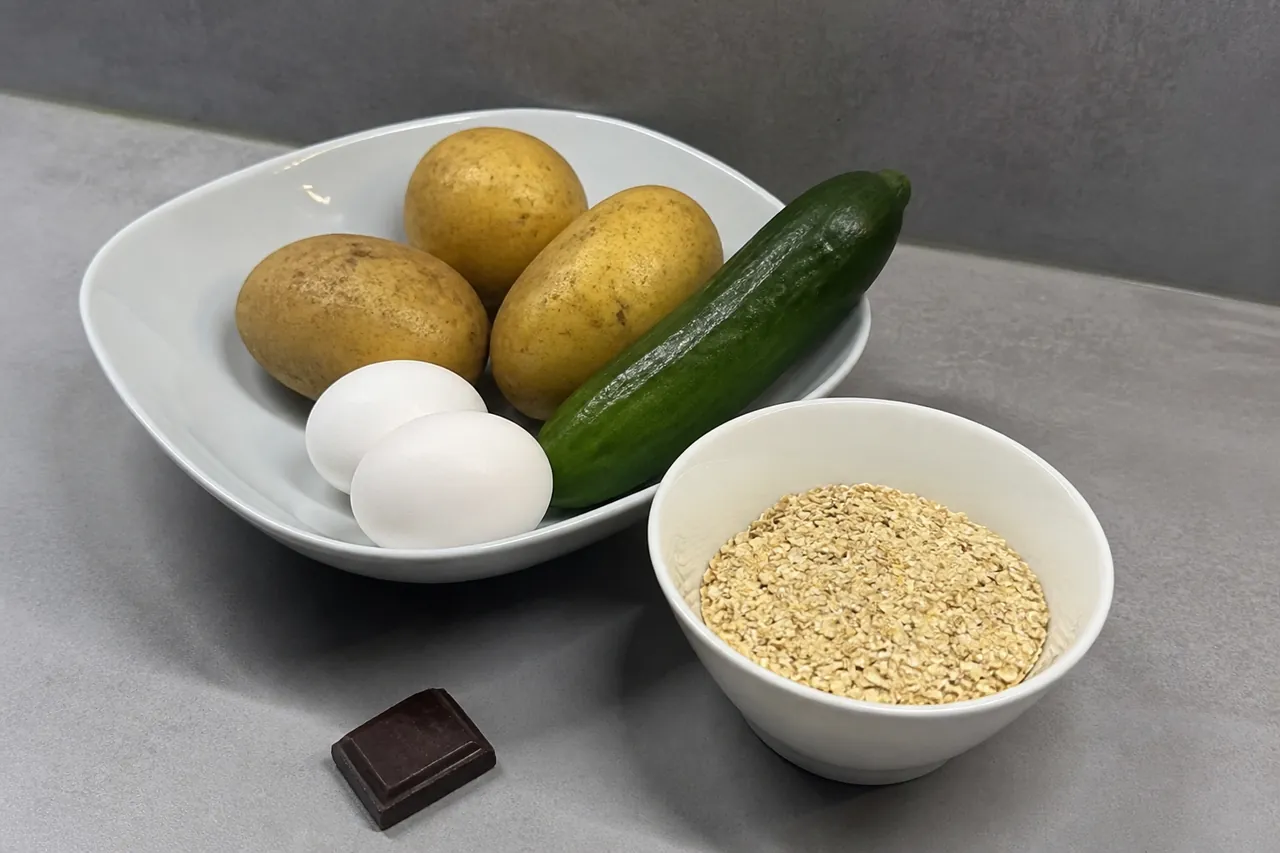
I use the phrase clean eating carefully. Food is not morally clean or dirty, and processing is not automatically harmful. During my loss of nearly 40 kilograms, ordinary home food helped because portions and ingredients were easier to understand. That is a practical benefit, not a purity rule.
Potatoes, oats, vegetables, eggs, fish, meat and dairy products made it easy for me to build recognisable meals. A treat or convenience food could still fit. The result depended much more on the pattern across normal days than on one product.
What minimally processed food did for my routine
Cooking from a few familiar ingredients made calorie tracking more straightforward. I knew what went into the pan and could repeat a portion that had worked before. Meals containing protein, fibre-rich foods and vegetables also tended to feel more like a complete meal than a series of small snacks.
I do not claim that every homemade meal is automatically low in calories or nutritionally balanced. Oil, sauces and large portions still count. The advantage was visibility: I could see the ingredients and adjust them without searching for a new diet.
Ultra-processed is a broad category
Ultra-processed foods are often discussed as if every product had the same effect. They do not all have identical nutrition. In a controlled NIH inpatient trial, however, participants ate more calories and gained weight during two weeks on an ultra-processed diet compared with a minimally processed diet, even though the presented diets were matched on several nutrients.
The study involved 20 adults and two short diet periods. It supports a possible effect on how much people eat in that setting, but it does not prove that one packaged product causes weight gain or that all processing is bad.
Processing can also be useful
Freezing vegetables, pasteurising milk, canning beans and cooking oats are forms of processing. They can improve safety, shelf life or convenience. A frozen vegetable mix may make a balanced dinner more likely on a busy day. A ready meal may sometimes be the realistic alternative to skipping food and becoming extremely hungry later.
This is why I focus on the whole diet. Most meals can be built around nutritious staple foods while some foods are chosen for convenience or enjoyment. There is no need to fear an ingredient list simply because it is long.
Food quality and calories are different questions
Energy balance still affects body weight. A nutritious food can contain a lot of energy, and a low-calorie product is not automatically a complete meal. Calorie tracking and food quality answer different questions: how much energy is in the pattern, and what does the pattern provide?
I found the process easier when I did not force these questions to compete. I could keep an eye on calories while also choosing foods that made meals filling and practical.
My flexible version
- Build most meals from familiar staple foods.
- Include a protein source and foods that provide fibre.
- Use frozen, canned and ready-made foods when they make the routine easier.
- Keep enjoyable foods in the plan without treating them as a failure.
- Judge the pattern across weeks, not the purity of one meal.
Flexibility made this sustainable for me. A piece of chocolate did not spoil the week and did not need to be compensated for. Returning to my next ordinary meal was enough.
How I shop without searching for perfect food
I do not try to find the ideal product in every category. I check whether the basket can make ordinary meals: a protein source, vegetables or fruit, a carbohydrate source and the fats needed for cooking. Convenience items and foods chosen for enjoyment can fit beside them.
Nutrition labels help compare similar products, but one number does not describe the whole diet. More salt, sugar or energy may be a useful reason to consider portion and frequency. It does not make the product forbidden.
Common questions
Do I have to avoid all processed food?
No. Processing covers many useful methods, and the nutritional value of products varies.
Are ultra-processed foods addictive?
That is too broad a conclusion for this article. Some products are easy to overeat, but individual behaviour and the evidence are more complex than a single label.
Can I lose weight while eating treats?
Yes, treats can fit within an energy deficit. The amount and the overall dietary pattern matter.
A useful staple meal does not need a long recipe. A familiar protein source, potatoes, rice or pasta and vegetables may be enough. Clear components make the portion easier to adjust, and the same food can work on a busy weekday without turning nutrition into a separate project.
Sources and further reading
Reviewed 6 August 2026